
Fairfax County VA Records empower residents to locate essential documents without leaving home, connecting directly to the Fairfax County Virginia public records system that aggregates everything from court filings to property deeds. By entering a name, case number, or address into the Fairfax County VA records search, users tap into a robust Fairfax County VA records online portal that instantly displays filing dates, status updates, and related parties. This streamlined Fairfax County VA records request process eliminates long wait times, offering a clear path to retrieve birth certificates, marriage licenses, or court judgments through the Fairfax County Virginia records database. Whether you need a Fairfax County VA document lookup for personal research or a Fairfax County VA open records request for legal purposes, the interface guides you step‑by‑step, ensuring each query returns accurate, official information while respecting privacy safeguards.
Fairfax County VA Records also serve professionals who rely on precise data for background checks, property investigations, or case preparation, providing a reliable Fairfax County VA public records search that meets strict compliance standards. The Fairfax County Virginia records request form is integrated within the same portal, allowing a single submission to trigger the Fairfax County VA records request workflow and receive documents via secure electronic delivery. By consolidating the Fairfax County VA records portal, the system reduces errors and speeds up access, helping users achieve their goals—whether confirming ownership, verifying court outcomes, or gathering evidence—without unnecessary delays or confusion.
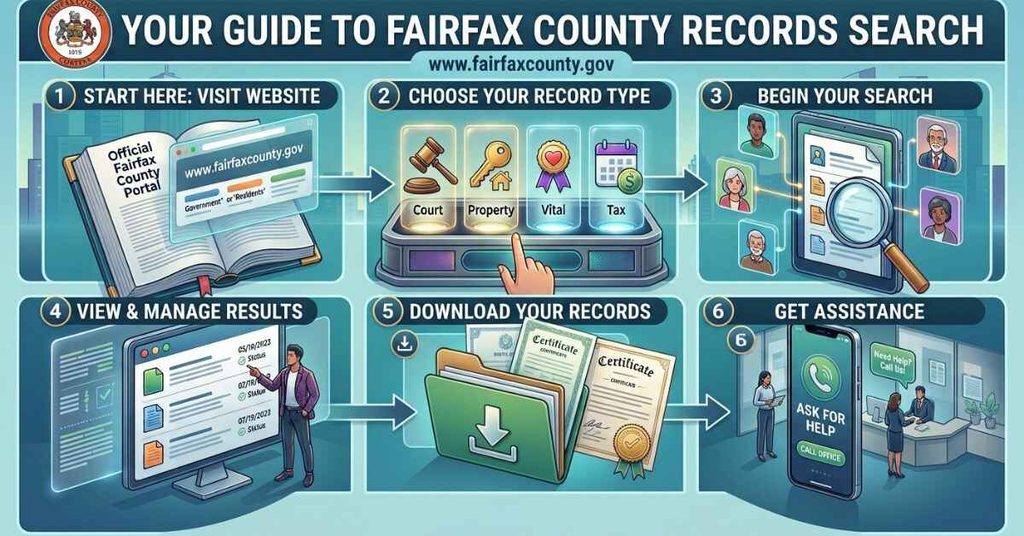
How to Search Fairfax County VA Records
You can begin your search for Fairfax County VA Records by identifying the specific document category you need, then directing your query to the correct county department. The Fairfax County Government maintains a centralized online system where you enter a name, case number, or parcel identifier to retrieve matching filings. You can also access public records to review official records. Each search returns filing dates, party names, and document images when available, so you can verify information without visiting a government building. The portal serves residents, attorneys, real estate professionals, and genealogists who need quick access to public documents. Before you start, gather any known details about the record, such as an approximate date or spelling variations of a name, to narrow your results and save time.
Official Search Portal: www.fairfaxcounty.gov
Inmate Search & Jail Records
The Fairfax County Sheriff’s Office oversees inmate custody at the Adult Detention Center, and the inmate search system offers a public lookup for current residents held in the facility. You can query the roster using a name or booking number to view charges, bond amounts, and projected release dates. This tool supports families seeking confirmation of an inmate’s status, attorneys preparing for court appearances, and researchers tracking local justice data.
Inmate Search
You can perform an inmate search through the Sheriff’s Office online roster, which lists everyone currently held in the Fairfax County Adult Detention Center. The roster displays booking photos, charges, and bond information so you can verify a person’s custody status within seconds. The database updates throughout the day, so the information you see reflects the latest bookings and releases processed by the intake team.
Inmate Search by Name
When you search by name, the system returns all inmates whose first and last names match your entry, including partial matches for common spellings. You can refine the results by selecting an alphabetical range or adding a date of birth to narrow the list. Each result links to a full profile page that shows charges, court dates, and facility housing assignments.
Current Inmates
The current inmates list shows every person detained at the Fairfax County Adult Detention Center on the day of your search. This roster includes individuals awaiting trial, serving short sentences, or held on behalf of other jurisdictions. The list refreshes after each booking cycle, so the data you retrieve is current as of your last page load.
Current Jail Bookings
You can review current jail bookings to see who entered the detention center most recently, with timestamps and arresting agency details. This view helps journalists and community members track arrest patterns in specific neighborhoods. Booking entries typically include the arrest location, primary charge, and identity of the holding officer.
Jail Roster
The jail roster presents a comprehensive directory of all inmates housed in Fairfax County custody, sorted by booking date or housing unit. You can scroll through the roster or use filters to find individuals with specific charge types, such as misdemeanors or felonies. The roster also notes special housing designations for medical or security reasons.
Jail Records
Jail records encompass the full history of an inmate’s time in custody, including intake forms, incident reports, and release documentation. You can request a copy of these records through the Sheriff’s Office records division, which charges a small fee for reproduction. These records serve as evidence in post-conviction motions and parole hearings.
Mugshots and Booking Photos
Booking photos, commonly called mugshots, are captured at intake and stored within each inmate’s profile. You can view these images through the public roster, which displays the photo alongside the inmate’s name and charges. The Sheriff’s Office retains these photos for the duration of the inmate’s detention and for a set period afterward.
Recent Bookings
The recent bookings feed lists the newest admissions to the detention center, with details on each arrest and the originating jurisdiction. You can monitor this list to confirm a family member’s recent arrest or to track high-profile cases. The feed updates several times each day as the intake team processes new arrivals.
Booking Reports
Booking reports document the official circumstances of an arrest, including the time, location, and officer involved. You can request a copy of a booking report by submitting a records request to the Sheriff’s Office, which reviews each application for legal compliance. These reports often accompany court filings as evidence of probable cause.
Booking Releases
Booking releases note the time and condition under which an inmate left the detention center, whether through bond, dismissal, or transfer. The release log updates automatically as the release team processes each departure. You can search this log to confirm that a specific inmate has been freed or moved to another facility.
Released Inmates
The released inmates archive maintains a record of everyone who left custody during the past 30 to 90 days, depending on retention policy. You can search this archive to verify past detention dates for personal or legal reasons. The archive also indicates whether the release was the result of a court order, bond posting, or sentence completion.
Inmate Population
The inmate population report tracks the total number of individuals housed at the detention center, broken down by charge severity and housing unit. This report helps policymakers assess jail capacity and informs decisions about pretrial release programs. You can access the daily population count through the Sheriff’s Office transparency page.
Arrests & Warrants
Fairfax County arrest and warrant data is maintained by the Sheriff’s Office and the Police Department, with public access points for recent activity and outstanding warrants. You can search these records to confirm a person’s legal status, prepare for a court date, or conduct a background review for employment. The systems update daily to reflect new charges and cleared warrants.
Arrest Records
Arrest records detail each instance when a person was taken into custody by a Fairfax County law enforcement agency. The record lists the date, location, arresting officer, and specific charges filed at the time of arrest. You can request a copy of an arrest record through the Police Department’s records unit, which processes requests in the order received.
Recent Arrests
The recent arrests log presents a chronological list of people booked into the detention center over the past several days. You can scan this log to see charges ranging from minor traffic violations to serious felonies. The log serves as a public record of law enforcement activity and helps news outlets track local incidents.
Active Warrant Search
You can search for active warrants issued by Fairfax County courts through the Sheriff’s Office warrant database. The search requires a full name or date of birth, and results show the warrant type, issuing court, and bond amount if applicable. The database does not list every warrant, so absence of a result does not guarantee that no warrant exists.
Wanted Persons
The wanted persons list features individuals sought by Fairfax County law enforcement for outstanding charges or probation violations. Each entry includes a photo, physical description, and the crime for which the person is wanted. If you recognize a person on the list, you can contact the Sheriff’s Office with information, though you should never attempt to detain the individual yourself.
Bench Warrants
Bench warrants are issued by judges when a person fails to appear in court or violates a court order. You can check for bench warrants through the court case search or by contacting the clerk’s office. Resolving a bench warrant typically requires a court appearance or payment of an outstanding fine.
Warrant Records
Warrant records include the original court order, supporting affidavits, and service history for each warrant issued. You can request these records through the Circuit Court Clerk’s office, which maintains a physical archive of warrant files. Some warrant details remain sealed while the case is under active investigation.
Criminal History
Criminal history records compile a person’s arrests, charges, and dispositions across all Virginia jurisdictions. You can request a criminal history check through the Virginia State Police, which maintains the central repository. The Fairfax County Police Department also provides local criminal history information for incidents occurring within county limits.
Background Checks
Background checks combine criminal history with other public records, such as civil judgments and property ownership. Employers, landlords, and volunteer organizations often request background checks before finalizing an offer. You can submit a background check request through the Virginia State Police or a third-party provider authorized to access state databases.
Criminal Records
Criminal records include charging documents, court dispositions, and sentencing orders for each criminal case. You can view these records through the court case search portal or by visiting the clerk’s office in person. The records remain public unless a judge has sealed them under specific statutory authority.
Felony Records
Felony records cover serious criminal charges that carry potential prison sentences of more than one year. The Circuit Court handles all felony cases in Fairfax County, and you can access case files through the clerk’s office. Each felony record includes the indictment, plea, and final judgment from the court.
DUI Records
DUI records document arrests and convictions for driving under the influence of alcohol or drugs. The General District Court processes most DUI charges, while felony DUI cases move to Circuit Court. You can request DUI records through the court system or the Virginia Department of Motor Vehicles for driving history purposes.
Court Records
Fairfax County court records are managed by the clerk’s offices for the Circuit Court and General District Court, with online access for most case types. You can search by name, case number, or attorney bar number to retrieve filing details, hearing dates, and judgment entries. The system covers civil, criminal, family, and probate matters from across the county’s judicial system.
Court Case Search
The court case search tool allows you to find active and closed cases by entering a party name or case number. The search returns a summary page that lists the case type, filing date, current status, and assigned judge. You can click into individual cases to view the full docket and any available document images.
Case Lookup by Name or Number
You can perform a case lookup using either a full legal name or a case number, with the system accepting partial name matches when the spelling is uncertain. The results page sorts cases by filing date, showing the most recent matters first. Each entry links to the docket sheet, which lists every motion, order, and hearing in the case history.
Case Information and Status
Case information pages show the current status of a legal matter, including whether it is pending, active, or closed. You can also see the next scheduled hearing date, the names of involved attorneys, and any outstanding motions. The status updates as the clerk's office enters new orders into the electronic system.
Court Calendar and Hearings
The court calendar displays daily, weekly, and monthly hearing schedules for each courtroom in Fairfax County. You can filter the calendar by judge, case type, or department to find specific proceedings. The calendar also notes whether hearings are conducted in person or via video conference.
Court Docket
The court docket lists every document filed in a particular case, from the initial complaint to the final judgment. Each docket entry shows the filing date, document type, and filing party. You can view the docket in chronological order or sort by document category for easier review.
Civil Court Records
Civil court records cover disputes between private parties, such as contract disagreements, personal injury claims, and property conflicts. The Circuit Court handles civil cases where the amount in controversy exceeds the General District Court's jurisdictional limit. You can search civil records by plaintiff or defendant name through the clerk's portal.
Criminal Court Records
Criminal court records include indictments, plea agreements, trial transcripts, and sentencing orders for felony and misdemeanor cases. The records remain public unless a judge has issued a sealing order. You can request certified copies of criminal records through the clerk's office for use in other legal proceedings.
Family Court Records
Family court records address divorce, child custody, support, and protective order matters. The Juvenile and Domestic Relations District Court handles most family cases, while the Circuit Court hears divorces and equitable distribution claims. Access to family court records is often restricted to protect the privacy of involved children and spouses.
Probate Court Records
Probate court records document the administration of estates after a person dies, including wills, inventories, and final distributions. You can search probate records by the decedent's name or case number through the Circuit Court Clerk's office. The records also cover guardianships and conservatorships for adults who cannot manage their own affairs.
Traffic Court Records
Traffic court records cover infractions such as speeding, reckless driving, and driving on a suspended license. The General District Court processes these cases, and you can search for traffic records by the defendant's name or ticket number. The records include the charge, fine amount, and any court-ordered traffic school requirements.
Vital Records
Fairfax County vital records include birth, death, marriage, and divorce documents that mark major life events. The Office of Vital Records maintains these documents and issues certified copies to eligible requesters. You can order records online, by mail, or in person, depending on the type of document and your relationship to the person named on the record.
- Birth certificates for anyone born in Fairfax County since the late 19th century
- Death certificates with cause of death information for public health purposes
- Marriage licenses and certificates issued by the county clerk
- Divorce decrees and final judgments from family court proceedings
- Obituary archives that supplement official death records
Birth Records
Birth records list the full name, date of birth, place of birth, and parents' names for individuals born in Fairfax County. You can request a certified copy through the Virginia Department of Health's Office of Vital Records. Hospital records and delayed birth certificates also exist for cases where the original birth was not registered promptly.
Death Records
Death records document the date, location, and cause of death for individuals who passed away in Fairfax County. The records also list the decedent's occupation, marital status, and surviving relatives. You can order a certified death certificate through the state vital records office or the funeral home that handled the arrangements.
Death Index
The death index provides a searchable list of all deaths registered in Fairfax County, sorted by year and name. Genealogists and family researchers use the index to locate specific death certificates for further documentation. The index covers both recent deaths and historical records dating back more than a century.
Marriage Records
Marriage records include the marriage license application, ceremony details, and officiant signature. You can also access court records to review official records. You can request a certified copy through the Circuit Court Clerk's office, which issues licenses and records ceremonies performed in the county. The records also note any name changes that result from the marriage.
Marriage License
You can apply for a marriage license at the Circuit Court Clerk's office, where both parties must appear with valid identification. The license is valid for 60 days after issuance, and the ceremony must occur within Fairfax County for the local records to apply. After the ceremony, the officiant returns the signed license to the clerk for recording.
Divorce Records
Divorce records contain the final decree, property settlement, and custody arrangements from a divorce proceeding. The Circuit Court issues these records, and you can request copies through the clerk's office. Some details may be redacted to protect the privacy of the involved parties and their children.
Divorce Decree
The divorce decree is the official court order that ends a marriage, and it lists the terms of the settlement. You can obtain a certified copy from the Circuit Court Clerk for use in name changes, remarriage, or property transfers. The decree also notes whether spousal support or alimony was awarded.
Dissolution of Marriage Records
Dissolution of marriage records are functionally identical to divorce records, as both terms describe the legal termination of a marriage. The records include all filings from the initial complaint to the final judgment. You can search these records by case number or the names of either spouse.
Genealogy Records
Genealogy records in Fairfax County include birth, marriage, death, and census records that help family historians trace their ancestry. The Fairfax County Public Library maintains a local history collection that supplements these vital records. You can also access federal census records and immigration documents through the National Archives.
Obituaries
Obituaries provide biographical summaries of deceased residents, often listing family members, occupations, and funeral arrangements. Local newspapers publish obituaries shortly after a death, and historical archives maintain them for genealogical research. The Library of Virginia also collects obituaries from across the state as part of its biographical index.
Property Records
Fairfax County property records are maintained by the Office of Land Records and the Department of Tax Administration. You can search for property information using an address, owner name, or parcel identification number. The records include sale prices, tax assessments, and deed transfers, which help buyers, sellers, and researchers evaluate real estate transactions.
Property Search
You can start a property search by entering an address, owner name, or parcel number into the county's property search tool. The system returns a list of matching parcels with summary information, including the assessed value, property type, and tax status. You can click into each parcel to view the full record and any related documents.
Property Search by Address
Searching by address returns a single parcel record that corresponds to the location you entered. The record shows the current owner, legal description, and recent sale prices. You can also view the property's tax payment history and any pending assessments.
Property Search by Owner
When you search by owner name, the system returns all properties currently associated with that person or business. This search works well for investors who want to track a landlord's portfolio or for attorneys handling estate matters. The results list each parcel with its address, assessed value, and tax status.
Property Records
Property records include the full chain of ownership for each parcel, from the original land grant to the present deed. You can view these records through the land records system, which indexes documents by grantor and grantee names. Each record links to a scanned image of the original deed for verification.
Property Ownership Records
Property ownership records show who legally owns a parcel, including any co-owners or trusts listed on the deed. The records also note the recording date and document number for the most recent transfer. You can use these records to confirm ownership before completing a real estate transaction.
Property Owner Lookup
The property owner lookup tool helps you find the current owner of a specific address, which is useful for service of process or neighbor disputes. The lookup draws from the land records database and updates as new deeds are recorded. You should verify the information with a title search before relying on it for legal purposes.
Address Lookup
You can perform an address lookup to retrieve property data, zoning information, and electoral district details for any location in Fairfax County. The lookup also shows whether the address falls within a historic district or special taxing area. The tool helps residents confirm jurisdictional boundaries for voting and tax purposes.
Deed Records
Deed records document the transfer of property between parties, including the sale price, legal description, and signatures of the grantor and grantee. The Circuit Court Clerk records these deeds, and you can view them through the land records portal. Each deed entry includes a book and page number that points to the original document.
Property Tax Records
Property tax records show the annual tax assessment, payment history, and any outstanding balances for each parcel. The Department of Tax Administration maintains these records and updates them after each billing cycle. You can view your own tax bill online or request a copy of any parcel's tax history.
Tax Liens
Tax liens attach to a property when the owner fails to pay property taxes, and the county records these liens with the Circuit Court Clerk. The liens remain on the property until the debt is paid or the property is sold at auction. You can search for tax liens by parcel number or owner name through the land records system.
Parcel Information
Parcel information includes the legal boundaries, lot size, zoning classification, and land use code for each tax parcel. Surveyors and developers use this data to plan subdivisions, site improvements, and permit applications. The Geographic Information System maps these parcels for visual reference.
Police & Incident Reports
Fairfax County Police Department records cover incidents reported within the county's jurisdiction, including crimes, traffic accidents, and emergency calls. You can request copies of incident reports through the police records unit, which reviews each request for legal compliance. The department also publishes a daily blotter of recent incidents for public awareness.
Incident Reports
Incident reports describe the facts of a police call, including the location, time, parties involved, and officer observations. The report may also list evidence collected and the next steps in the investigation. You can request a copy of an incident report if you are a victim, witness, or authorized representative.
Police Records
Police records include arrest reports, field interview cards, and supplemental narratives that document officer activity. The records unit processes requests for these documents in accordance with the Virginia Freedom of Information Act. Some records remain exempt from disclosure during active investigations.
Police Blotter
The police blotter is a daily summary of notable incidents, arrests, and traffic enforcement actions across the county. You can read the blotter online to stay informed about local public safety issues. The blotter excludes sensitive details that could compromise ongoing investigations.
Recent Incident Reports
You can review recent incident reports to see the types of calls handled by Fairfax County officers over the past few days. The reports list the date, location, and general nature of each incident without revealing personal identifiers. Community members use this feed to track neighborhood safety trends.
Traffic Records
Traffic records document moving violations, accidents, and driving-under-the-influence arrests processed by Fairfax County officers. The records also include citations issued by the Virginia State Police on county highways. You can request a copy of your own traffic record or a specific citation through the court or police department.
Traffic Ticket Records
Traffic ticket records show the citation number, violation code, fine amount, and court date for each ticket issued. The General District Court processes most traffic tickets, and you can look up your case by ticket number on the court portal. Paying the fine or requesting a court appearance resolves the ticket.
Accident Reports
Accident reports describe the circumstances of vehicle crashes, including the drivers involved, road conditions, and any injuries reported. Officers file these reports within days of the crash, and you can purchase a copy through the police records unit. Insurance companies often require the report to process claims.
People & Phone Search
Fairfax County people search tools help you locate residents, verify contact information, and reconnect with acquaintances. The county itself does not maintain a comprehensive people directory, but you can use public records aggregators and licensed search services to find current addresses and phone numbers. These searches draw from property records, voter registrations, and business filings.
People Search
A people search lets you find current and past residents of Fairfax County using a name and optional age range. The results may include addresses, phone numbers, and known relatives. You can use the information to verify a contact before meeting or to locate a missing family member.
Person Lookup
Person lookup services aggregate public records from multiple jurisdictions to build a complete profile of an individual. The profile may include property ownership, professional licenses, and any court cases filed in the person's name. The accuracy of the data depends on how recently the source records were updated.
Phone Lookup
You can perform a phone lookup by entering a phone number to identify the registered owner and carrier. Reverse phone directories also flag spam numbers and telemarketers. The results are most accurate for landline numbers, while cell phone lookups may return limited information due to privacy rules.
Reverse Phone Lookup
A reverse phone lookup shows the name and address associated with a phone number, which helps you screen unknown callers. The service draws from public databases and user-contributed directories. You should treat the results as a starting point and verify the information through additional sources before acting on it.
Phone Directory
The phone directory lists landline numbers for residents and businesses in Fairfax County, organized by name and address. You can use the directory to find a specific person or to identify the owner of a particular phone number. The directory updates quarterly as new numbers are assigned.
Residents Directory
The residents directory provides a snapshot of households in Fairfax County, including the names of adult occupants and their mailing addresses. The directory draws from voter registration records and utility hookups. Marketing firms and political campaigns often use this type of data for outreach.
White Pages
White pages listings show the name, address, and phone number of residents who have not opted out of public listings. The listings cover both landline and published cell phone numbers. You can search white pages online or request a printed copy from the library for local research.
Public Contact Records
Public contact records combine elements of the residents directory, business filings, and licensing databases to present a complete contact profile. These records help journalists verify sources and assist nonprofit organizations in their outreach. The records respect state privacy laws, so some information may be redacted.
Vehicle Records
Fairfax County vehicle records are managed by the Virginia Department of Motor Vehicles, with local courts processing traffic-related cases. You can search for vehicle information using a license plate or vehicle identification number, then verify ownership and title status. These records help buyers confirm the legitimacy of a used car before purchase.
License Plate Lookup
A license plate lookup reveals the registered owner of a vehicle, the make and model, and the registration expiration date. The Virginia DMV provides this service to law enforcement and licensed private investigators. As a private citizen, you can request a limited lookup that confirms the plate is valid and the registration is current.
VIN Lookup
You can perform a VIN lookup to retrieve a vehicle's history, including past accidents, title brands, and service records. You can also access property records to review official records. The National Motor Vehicle Title Information System offers a free basic lookup, while paid services provide more detailed reports. The information helps you assess a used car's value and condition before buying.
Vehicle Records
Vehicle records include the title history, registration renewals, and any liens recorded against a specific vehicle. The Virginia DMV maintains the central database, and you can request a copy of your own vehicle record at any DMV office. Lenders and insurance companies also access these records when underwriting policies.
Traffic Records
Traffic records at the local level include citations, accident reports, and court dispositions for traffic violations handled in Fairfax County. The General District Court processes these records, and you can request a copy through the court clerk. The records remain on your driving history for several years, depending on the violation type.
Business Records
Fairfax County business records are filed with the State Corporation Commission and the county clerk, depending on the entity type. You can search for business information using a name, registration number, or assumed name. The records help competitors, customers, and investors verify that a company is legitimate and in good standing.
- Business entity filings with the Virginia State Corporation Commission
- Assumed name certificates filed with the county clerk
- UCC financing statements recorded with the state
- Business ownership records linked to property and tax accounts
Business Records
Business records include articles of incorporation, annual reports, and amendments filed with the State Corporation Commission. You can view these records through the SCC's online business search tool. The records show the company's principal office, registered agent, and the names of officers and directors.
Business Search
You can perform a business search to find any entity registered to operate in Virginia, including corporations, limited liability companies, and partnerships. The search returns the entity's status, formation date, and principal address. The tool helps you check name availability before forming a new business.
Business Lookup
A business lookup by tax identification number returns the legal name, mailing address, and any outstanding tax liens filed against the company. The Department of Tax Administration maintains these records for businesses operating in Fairfax County. The information helps vendors and lenders assess credit risk.
Assumed Name Records
Assumed name records, also called fictitious name filings, allow a business to operate under a name other than its legal name. The county clerk records these filings, and you can search the records to find the legal entity behind a trade name. The records also list the address where the business operates.
UCC Records
UCC records document secured transactions between lenders and borrowers, such as loans collateralized by business assets. The State Corporation Commission indexes these filings by debtor name and asset description. Creditors search the records to verify that collateral is not already subject to another lien.
Business Filings
Business filings include the formation documents, biennial reports, and dissolutions that track a company through its life cycle. You can order certified copies of any filing through the State Corporation Commission. The filings serve as the official record of a business's legal status in Virginia.
Business Ownership Records
Business ownership records tie a person or entity to a specific company, listing their percentage of ownership and role. You can find these records through the SCC's business search and through the Fairfax County property records if the business owns real estate. Investors use the records to confirm control of a company before investing.
Public Records
Fairfax County public records encompass every document produced or received by a government agency, unless specifically exempted by law. You can request these records through the Virginia Freedom of Information Act, which requires agencies to respond within five business days. The county's public information office coordinates responses and helps requesters narrow their queries.
Public Records Search
A public records search starts with identifying the agency that maintains the document you need, then submitting a written request to the agency's FOIA officer. The officer will either provide the records, deny the request with an explanation, or quote a fee for reproduction. You can also use online portals for many common records to skip the written request.
Online Records Search
Online records search portals let you query court records, property records, and vital records from your computer without submitting a formal FOIA request. The portals return results immediately and let you download documents for a small fee. The available records depend on the agency's digitization practices.
Open Records
Open records refer to government documents that are not restricted by law from public disclosure. Most records, including meeting minutes, contracts, and emails, fall into this category. You can request open records through the FOIA process, and the agency must provide them unless a specific exemption applies.
Official Records
Official records are documents that the county clerk or another custodian records to give public notice, such as deeds, marriage licenses, and court judgments. These records carry a presumption of validity and are admissible in court as proof of the facts they contain. You can obtain certified copies from the recording office for a small fee.
Public Information Requests
Public information requests under the Virginia Freedom of Information Act must be in writing and describe the records you seek with reasonable specificity. The agency will acknowledge receipt and respond within five business days. If the request is denied, the agency must cite the specific exemption that applies.
Records by Department
Each Fairfax County department maintains its own set of public records, so identifying the correct department speeds up your request. The county website lists each department's contact information and the types of records it holds. You can submit your request directly to the department's FOIA officer for the fastest response.
County Government
Fairfax County operates under a county executive form of government, with a Board of Supervisors that sets policy and an appointed county executive who manages daily operations. You can access meeting agendas, budget documents, and ordinances through the county website. The various departments and elected offices each produce records that fall under the public records law.
County Auditor
The county auditor reviews financial transactions and internal controls to ensure that county funds are spent properly. The auditor's office produces annual reports and special audits that you can read on the county website. The reports help residents track how their tax dollars are managed.
County Clerk
The county clerk, formally known as the Circuit Court Clerk, records deeds, marriage licenses, and court documents. The clerk's office issues certified copies of these records for a small fee. You can also access the clerk's online portal to search recorded documents without visiting the courthouse.
District Clerk
The district clerk manages the records of the General District Court and the Juvenile and Domestic Relations District Court. The clerk's office maintains case files, dockets, and exhibits for all matters heard in those courts. You can request copies of case files through the district clerk's office.
Tax Office
The Department of Tax Administration handles real estate tax bills, personal property taxes, and business taxes. The office maintains records of tax payments, assessments, and delinquent accounts. You can view your own tax records online or request copies of any parcel's tax history.
Sheriff's Office
The Sheriff's Office operates the Adult Detention Center, serves court papers, and enforces court orders. The office produces jail rosters, warrant lists, and incident reports that you can search online. The Sheriff's Office also handles civil process service and courthouse security.
Elections
The Office of Elections manages voter registration, polling places, and ballot counting for Fairfax County. You can verify your own registration, find your polling place, and view election results on the office's website. The office also maintains records of campaign finance filings for local candidates.
County Departments
Fairfax County departments each handle a specific area of government service, such as public works, health, and human services. Each department maintains its own set of public records, and you can submit FOIA requests directly to the relevant department. The county website lists contact details for every department.
Commissioners Court
The Board of Supervisors serves as the legislative body for Fairfax County, and its meetings are open to the public. You can view meeting agendas, minutes, and video recordings on the county website. The Board's actions, including budget approvals and zoning decisions, are recorded in the official minutes.
County Judge
The Circuit Court judges hear felony criminal cases, civil disputes, and family law matters in Fairfax County. The judges' orders and judgments are part of the public record and can be accessed through the clerk's office. You can also view the judges' calendars to find hearing dates for specific cases.
GIS & Maps
Fairfax County operates a Geographic Information System (GIS) that layers property boundaries, zoning, and infrastructure data onto interactive maps. You can use the GIS portal to view parcel lines, find voting precincts, and research flood zones. The maps draw from the same data used by county planners and emergency responders.
GIS Map
The GIS map presents a visual representation of Fairfax County, with layers that you can toggle on and off depending on your interest. Common layers include zoning, land use, and political boundaries. You can zoom in to view individual parcels and click on them to see ownership and tax information.
Property Map
The property map shows the boundaries and identification numbers of every tax parcel in the county. You can overlay the property map with zoning, floodplain, and historic district layers for a complete picture. The map helps real estate professionals evaluate a property before purchase.
Parcel Map
The parcel map breaks the county into individual tax parcels, each with a unique identification number. You can use the map to confirm a parcel's dimensions and check whether the property borders any easements. The map updates as new subdivisions are recorded with the county.
Precinct Map
The precinct map shows the boundaries of voting precincts and polling places across Fairfax County. You can enter your address to find your assigned precinct and polling location. The map also shows congressional, state senate, and House of Delegates districts for context.
Interactive Map
The interactive map combines several GIS layers into a single viewer, letting you switch between property, zoning, and environmental data. You can measure distances, print map images, and export data for use in other applications. The map runs in any modern web browser without special software.
Property Boundary Map
The property boundary map shows the exact legal boundaries of each parcel, including any rights-of-way or easements. You can use the map to verify that a fence or structure sits within the property line. Surveyors rely on this map when preparing plats for new construction.
Geographic Information
Geographic information in Fairfax County includes elevation, soil type, watershed, and other environmental layers. The data supports planning decisions, emergency response, and environmental protection efforts. Researchers and students can download the data for academic projects.
Unclaimed Money & Property
Fairfax County holds unclaimed money and property that residents have abandoned or forgotten, including uncashed checks, security deposits, and contents of safe deposit boxes. The Virginia Department of the Treasury administers the unclaimed property program, and you can search the statewide database for free. Claiming your property requires proving your identity and your connection to the original account.
Unclaimed Money Search
You can search for unclaimed money by entering your name or business name into the Virginia Department of the Treasury database. The search returns any accounts that have been turned over to the state, along with the reported amount. You can file a claim online if you find a match.
Unclaimed Property Search
An unclaimed property search covers all types of dormant assets, including bank accounts, stocks, and insurance proceeds. The search is free and confidential, and you can perform it for deceased relatives using their legal name. The database updates monthly as new properties are added.
Unclaimed Funds
Unclaimed funds may come from utility deposits, insurance refunds, or court settlements that the recipient never collected. The county treasurer reports these funds to the state after a statutory dormancy period, which varies by asset type. The state holds the funds indefinitely until the rightful owner files a claim.
How to Claim Unclaimed Property
You can claim unclaimed property by submitting a claim form through the Virginia Department of the Treasury website or by mail. The form requires your identifying information, the property account number, and documentation linking you to the original owner. The state reviews the claim and issues payment, typically within a few months.
Contact Information
You can reach the Fairfax County Government through the official website, where each department lists its direct phone number, email address, and physical location. The main county website links to the offices that handle court records, property records, vital records, and law enforcement records. For records not available online, the site provides instructions for submitting a written request or visiting the office in person during business hours.
For the most current phone numbers, email addresses, and street addresses, visit www.fairfaxcounty.gov and navigate to the relevant department page. The site also lists office hours, accepted payment methods, and any fees required for certified copies. If you cannot find a specific record online, the website provides a general inquiry form that routes your question to the appropriate staff member.
Frequently Asked Questions
Find quick answers for common queries about Fairfax County VA Records, including how to search, what details you can see, and steps for requests.
How can I search Fairfax County VA Records online?
Start at the Fairfax County portal that hosts the public records database. Choose the document type you need, such as deeds, permits, or court filings. Enter a name, case number, or parcel ID in the search box. The system returns matching entries with filing dates and, when available, thumbnail images. Review the results and click a record to view a full PDF or request a copy. No registration is required for basic searches.
What details appear in a Fairfax public search?
The search result list shows the filing date, the parties involved, and a short description of the document type. If the record includes a scanned image, a preview appears next to the entry. Clicking the entry opens the complete document, which may contain signatures, property boundaries, or court decisions. The portal also displays the record’s unique identifier, useful for follow‑up requests or citation.
Where do I file a Fairfax County VA records request?
Submit a request through the Fairfax County open records portal. Select the “Request Records” option and fill out the form with the record’s identifier or a description of what you need. Attach any supporting information that clarifies the request. After submission, the office confirms receipt and provides an estimate of processing time. You can track the request status online or receive updates by email.
Are there fees for Fairfax County VA document lookup?
Viewing records online does not incur a charge. Fees apply only when you order a certified copy or a bulk extraction. The cost depends on the document type and the number of pages. The portal displays the fee schedule before you confirm the order, so you know the total amount in advance. Payment can be made with a credit card or electronic check.
How long does an open records request take in Fairfax?
Standard requests are processed within ten business days after the office receives a complete submission. Requests for large or complex files may need additional time, and the agency will notify you of any delay. You can check the estimated completion date on the request tracking page. If you need faster access, the portal offers an expedited service for a higher fee.